
HOTEL BALCÓN DE CÓMPETA
Get to know our traditions, parties and history
Cómpeta, whose name derives from the Latin term Cómpita-Orum, which means «crossroads» or «meeting place» , where the Romans celebrated their festivities in honor of the lares of the roads, is a beautiful and charismatic town of the Axarquía malagueña. In the absence of written documents on its foundation, the etymology of its name serves as a basis for thinking that Cómpeta is an enclave of Roman origin.
Lying on the southern foothills of the Tejeda and Almijara mountain ranges, it is the bridge between the La Axarquía of Malaga and the Apujarra of Granada and forms an elegant picture of white houses spilled on the soft undulations of the landscape, among which the ocher figure of the tower of the church of Our Lady of the Assumption , the most notable building in the town.
Cómpeta, bustling, happy and full of light, houses a population of about 4,000 inhabitants, with the peculiarity that we can find among them around 36 different nationalities.
Its mild climate, its gastronomy based on the richness and quality of natural products, its famous wine, which celebrates its festival on August 15, its welcoming and hospitable people, and the beauty and tradition of its parties, make of Cómpeta one of the favorite destinations of those who look for the balance between tranquility, comfort, tipismo and diversion.
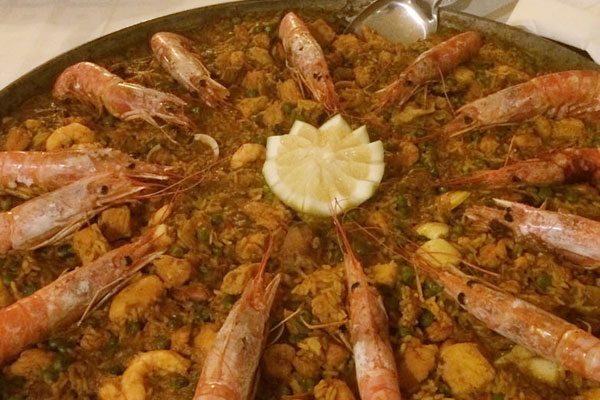
Gastronomy
Typical dishes from the area are fennel stew, migas, Easter stew, and products that have achieved great prestige such as oil, honey and raisins. Cómpeta, along with other towns in the area, is an essential step of the so-called Ruta del Sol y del Vino.
The main popular festivities of the town are:
The Sunday closest to January 20 is the Feria del Barrio, a beautiful country festival in honor of San Sebastián, patron of Cómpeta, in which the saint’s image is taken out in procession.
Competa Fair, from July 20 to 25, have their origin in the celebrations in honor of San Sebastian, is celebrated for 4 days the streets of the town are filled with dancing, singing and the usual joy of the popular festivals of Andalusia.
The famous Noche del Vino de Cómpeta is celebrated every year on August 15 and, in addition to enjoying the delicious sweet wine of Cómpeta, musical performances by top-level artists take place.
At Christmas there is a beautiful Misa del Gallo livened up by local choirs.
Another important party is the Noche de las Lumbres. It takes place on the night of September 7, date in which the hills are filled with bonfires and the sound of conches. The celebration always moves to the particular farmhouses of the town.
The Day of the Cross is celebrated on May 3. In this case, the people make a cross of carnations of different colors that is carried in procession to the “Cruz del Monte”. Before you can enjoy dances, meals and games in the town.
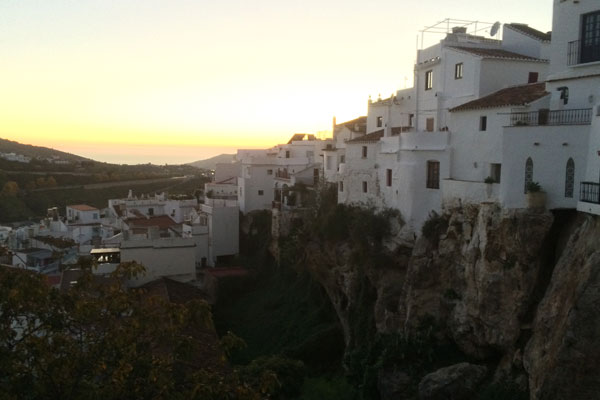
The Hanging Houses
The Hanging Houses are located in the Plaza de la Vendimia, from where you can enjoy the houses built on the edge of the mountain. The old buildings stand out, along with the modern paintings in addition to the vegetation in the background. A haven of tranquility
Semana Santa
Semana Santa is a time of tradition and cultural splendor. For example, a custom of Good Friday is the Via Crucis or Procession of Men, which is celebrated at 7 o’clock in the morning, in which the Crucified Christ is processed. And the last procession of the night is Soledad, accompanied exclusively by women, and worn by married men.
You can find us at …
Calle San Antonio, 75 29754 Málaga Cómpeta (Spain)
Tel: +34952553535 Fax: +34952516780 Whatsapp: +34671132563